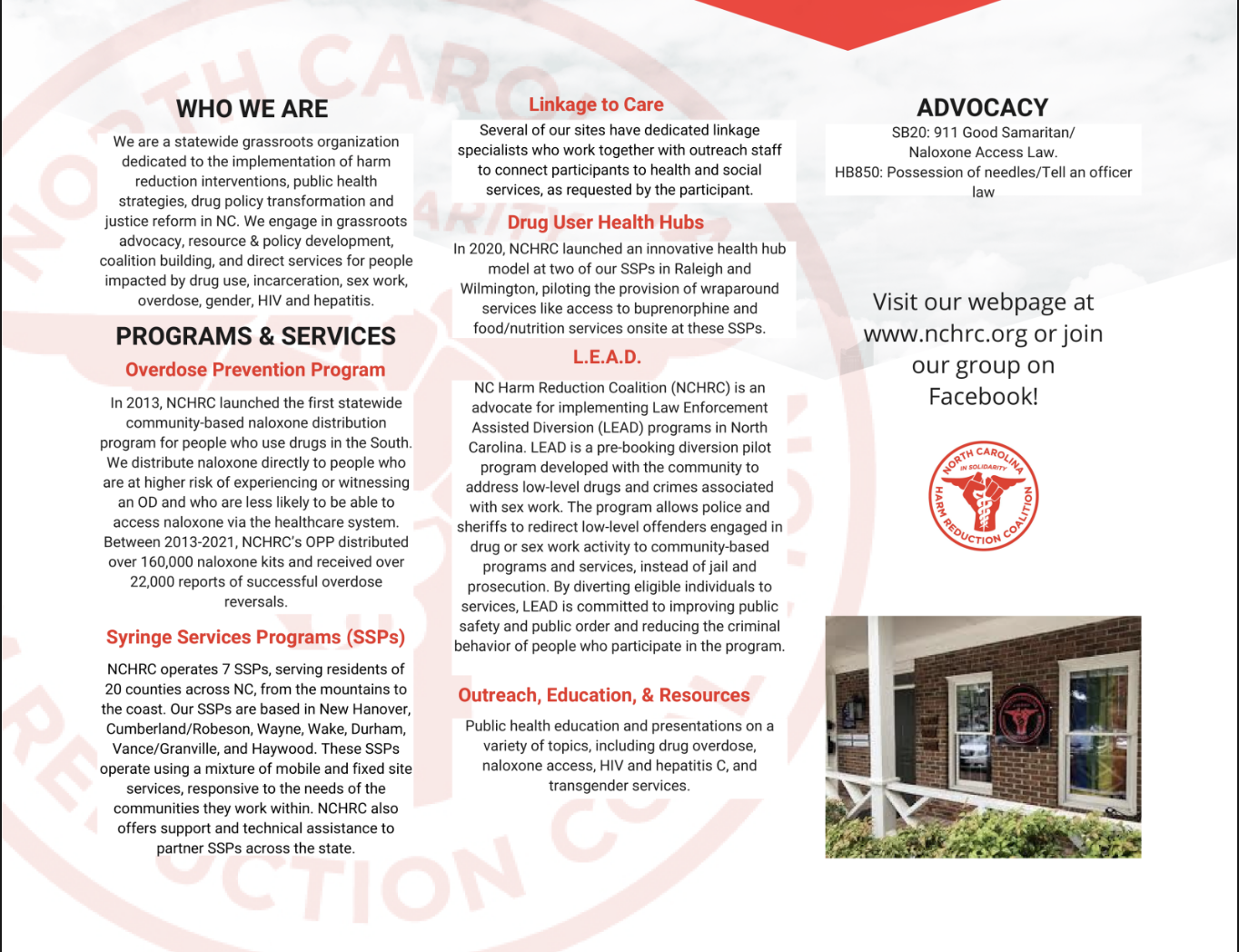
Since 2013, NCHRC has distributed over 224,000 naloxone kits and received over 27,000 reports of successful overdose reversals using our naloxone kits.
For Individuals Seeking Naloxone
You qualify to receive a free naloxone kit from NCHRC if any of the following match your experience:
- You are actively using drugs
- You are in recovery from drug use (including by using medications for opioid use disorder like methadone or buprenorphine)
- You sell drugs
- You do sex work
- You live in the same household as someone who is actively using drugs
- You have recently come home from jail, prison, or detox
- You are transgender
Drop by one of our sites and talk to one of our Outreach Workers.
Tips for Preventing Overdoses
The best way to not overdose is not to use drugs, but if you do, please follow the recommendations below:
- Know what you are taking; if you don’t, get it tested! You can go to various organizations across the state, including us, and get it tested at www.streetsafe.supply.
- Know the strength of the drug you’re taking (is it 2mg vs. 80mg?)
- Know the length of the drug you are taking (is it short-acting, long-acting, or extended release?)
- Don’t mix your drugs (this includes alcohol, benzos, antidepressants, cocaine)
- If you don’t use it for a while (a couple of days, weeks, months), start with a low dose. When you don’t use it for a little while, you lose your tolerance.
- Use with other people: if something goes wrong, they can have your back. Don’t use alone!
When Is an Overdose Most Likely?
- When you have not used for a while
- If you are rushing
- When you don’t know what you are taking
- If you’ve ever overdosed before
- When you change suppliers or try a new batch
- If you use alone
- When you have just been released from jail, prison, drug treatment, or drug detox
- When you are sick
- If you have kidney disease, liver disease, AIDS, or hepatitis
What an Overdose with a Depressant Looks Like
- Unresponsive to outside stimulus
- Loss of consciousness
- May be awake, but unable to talk
- Breathing is very slow and shallow, erratic, or has stopped
- Pulse (heartbeat) is slow, erratic, or not there at all
- Body is very limp
- Face is very pale or clammy
- Fingernails and lips turn blue or purple
- Choking sounds, or a gurgling noise
- Vomiting

What an Overdose with a Stimulant Looks Like
- Racing pulse
- Loss of consciousness
- Pressure, tightness, or pain in chest
- Difficulty breathing
- Headache, ringing in the ears, dizziness
- Foaming at the mouth
- Profuse sweating, or failure to sweat
- Grossly enlarged pupils
- Muscle cramps
- Inability to urinate
- Nausea and vomiting
- Shaking, or seizures
What NOT to Do
Do not inject someone overdosing on heroin with speed, oxy, meth, or cocaine. It’s not a good use of time and can make them worse. It’s one more drug their body has to deal with.
Do not try to make someone drink coffee or another substance if they are passed out.
Do not put the person in an ice-cold bath; it could put them into shock, or they could drown. If they are still breathing, you can put them under a cool shower to wake them, but stay with them and keep the water away from their nose and mouth.
Do not inject them with salt water, drugs, or milk; it won’t bring them back, and in the time it takes to find a vein, you could be rescue breathing or trying to wake them up.
How to Reverse an Opioid Overdose
Depressants and sedatives slow down your heart rate and breathing. A person who overdoses on a depressant may pass out, stop breathing, or choke on their own vomit — any of which can lead to death. Sometimes you can hear a person’s raspy breathing and you know they’re having problems.
If they’ve stopped breathing, you may not know it until they begin to turn blue, at which point they’re very close to dying and need immediate attention — rescue breathing or CPR. The most important thing is to act right away and don’t hesitate to call 911!
If a person is still conscious, walk them around, keep them awake, and monitor their breathing. If they pass out and become unresponsive, call 911! If you’re afraid of the police, refrain from using the word “overdose”; you can say they’re choking and turning blue or having a seizure and foaming.
If the person is unconscious, try to wake them up by calling their name or yelling “Narcan” or “It’s the Police!” If they do not respond, try waking them with pain stimulus by pinching their ear, under their arm, or doing a sternum rub with your knuckles. Be sure to check their breathing; you need 1 normal breath every 5 seconds to stay alive. Put your face over theirs and feel for air against your cheek while watching to see if their chest rises and falls. If they are not breathing, put the person in the recovery position and call EMS 911!
If You Have Narcan (Naloxone)
- Lay the person flat on the floor or ground.
- Draw all of the naloxone that is in the vial up into the syringe and administer into the muscle: upper thigh, upper arm, or buttocks. You may go right through clothing.
- Begin rescue breathing by tilting the head up to clear the airway, pinch the nostrils shut, then cover their mouth with yours and blow into their mouth.
Naloxone takes about 2–3 minutes to begin to take effect, but it could take a few minutes more for the victim to come out of it, so go ahead and administer the second dose. In the meantime, it’s important that you breathe for them using “rescue breathing”.
Naloxone enables breathing, so once the victim is breathing on their own regularly, you can stop administering naloxone and doing rescue breaths; they don’t have to be up and alert.
If you have to leave for any reason, put the victim in the recovery position.